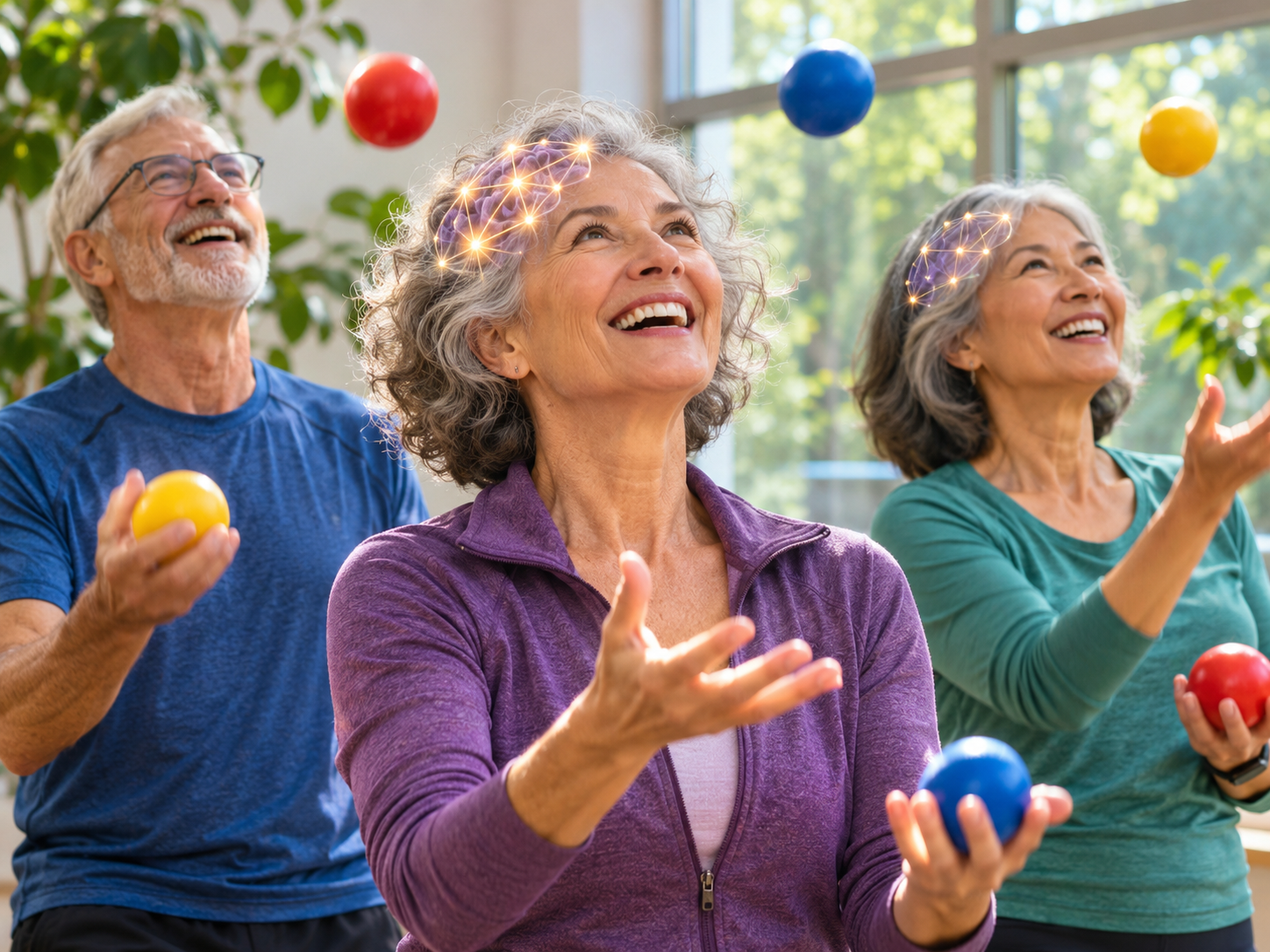
Picture a group of older adults standing in a room, tossing bright juggling balls into the air. At first, balls tumble to the floor. Hands reach too late. Everyone laughs and tries again. But something extraordinary is happening where no one can see it: their brains are adapting to a new challenge.
In a published brain-imaging study, older adults learned to juggle, and researchers detected changes in parts of the brain involved in motion and memory. The brain was responding to practice—even later in life.
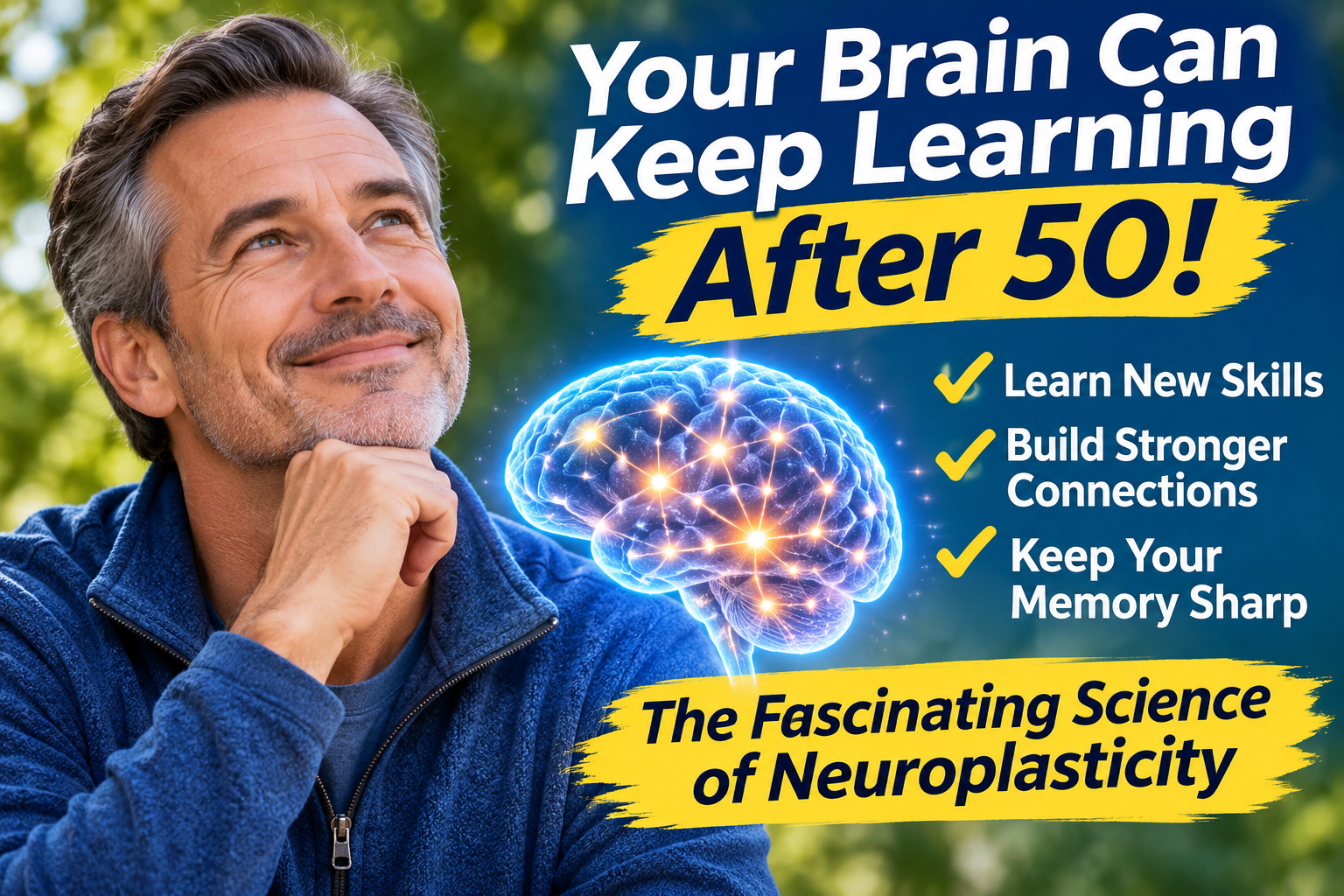
The fascinating discovery: Your brain can keep changing as you learn. Scientists call this ability neuroplasticity. It helps explain why people can learn new movements, build skills, and form memories throughout adulthood.
Your Brain Is a Living Network
Inside your brain are billions of nerve cells called neurons. They send messages through electrical signals and chemical messengers. One neuron can communicate with many others at tiny meeting places called synapses.
Imagine a busy city full of roads. Some routes are used every day. Others are quiet. When you practice a skill, networks of brain cells become active together, and some connections can change in strength. Over time, the brain can become more efficient at handling a familiar task.
Scientists use the word plasticity for the brain’s ability to change its function and, in some circumstances, its structure in response to experience.
An Even Bigger Surprise: Your Brain May Make New Neurons!
Imagine tiny nerve cells reaching out to connect with their neighbors. As you learn, existing brain cells can strengthen the connections between them. Some connections can even form in new places. That’s one remarkable part of neuroplasticity.
But scientists have discovered something even more amazing. Deep inside your brain is the hippocampus, an area involved in learning and memory. Researchers have found evidence that new neurons can develop there during adulthood. The process is called neurogenesis.
In 2025, a study published in Science identified dividing cells in the adult human hippocampus that can give rise to nerve cells. Then, in 2026, researchers writing in Nature discovered intriguing signs of new-neuron development in the brains of older adults—including SuperAgers, people over 80 with unusually strong memories.
Scientists are still studying how this process works and what it means for memory. And here’s an important distinction: learning changes brain connections, while neurogenesis refers specifically to new neurons forming. Both reveal just how extraordinary the living brain can be.
The Juggling Experiment That Surprised Scientists
Researchers in Germany invited older adults to learn a three-ball juggling pattern. Using magnetic resonance imaging, or MRI, they studied brain structure before and after the learning period.
The volunteers learned the skill. Their scans also showed changes in the amount of gray matter detected in specific brain regions, including an area that helps process visual motion. The study also observed changes in regions associated with memory and motivation.
Here’s what makes that finding so interesting: learning something new was linked with measurable changes in the aging brain. It gave scientists a remarkable glimpse of how adaptable the brain remains.
Another study that tested people from childhood through age 89 found that older adults improved their juggling performance after instruction and practice. At every age, learning can involve a little trial, error, and discovery.
What Happens When You Practice a New Skill?
1. Your Brain Notices Something New
Perhaps you’re learning a dance step, a tennis backhand, or a few phrases in another language. At first, the task takes a lot of attention. Brain networks involved in sight, movement, planning, and memory work together to figure it out.
2. Practice Gives the Connections More Work
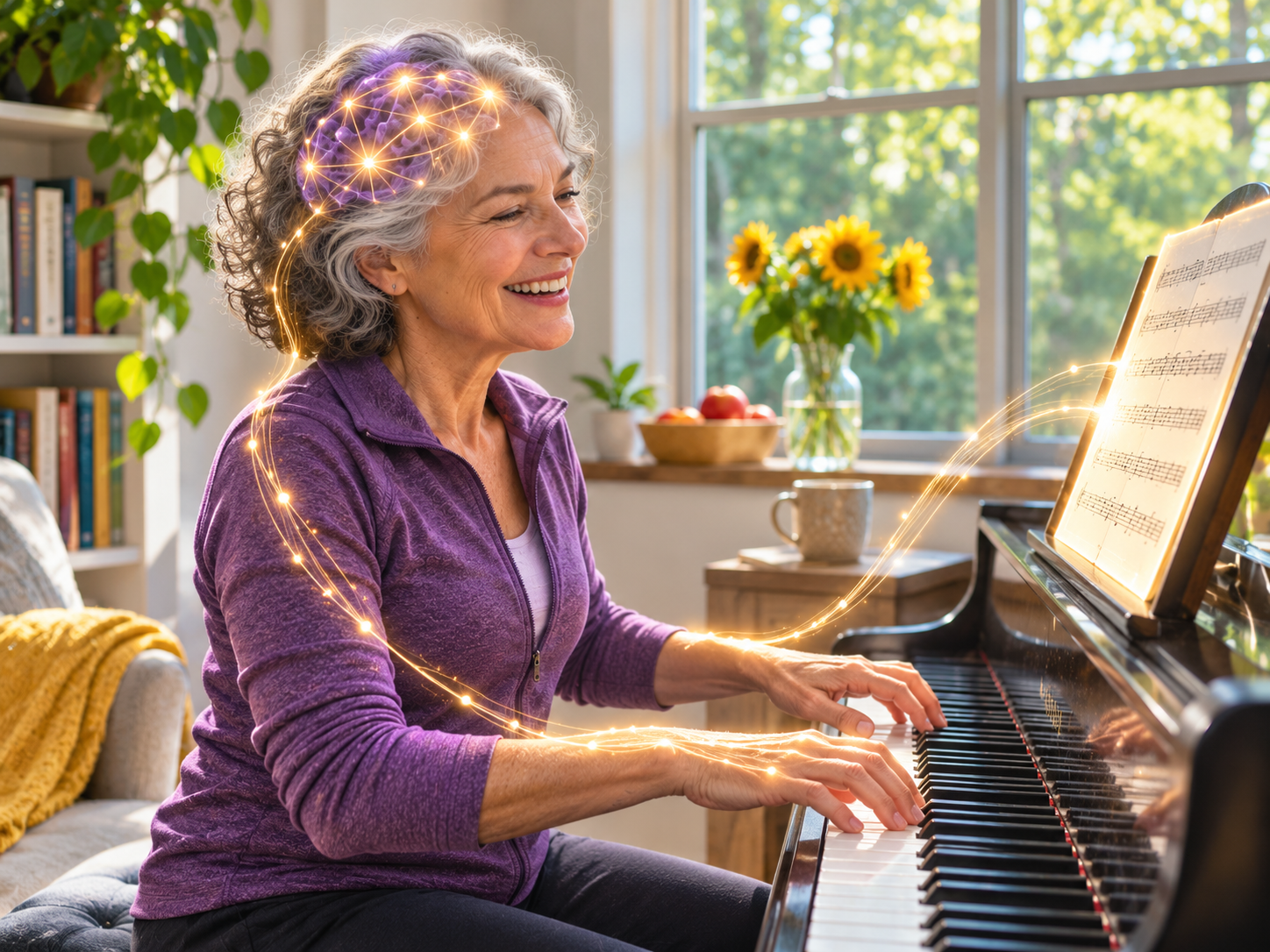
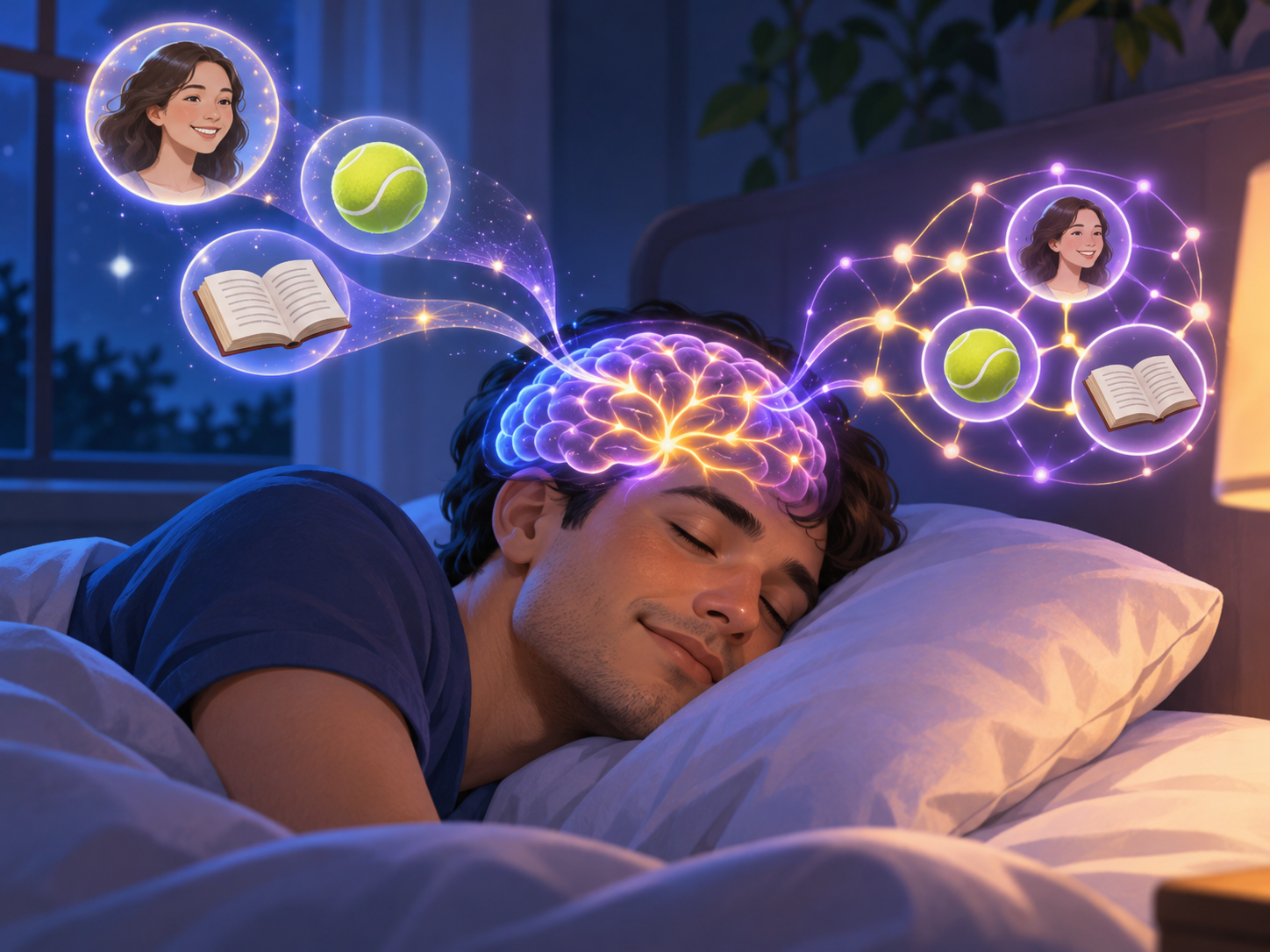
Imagine a tiny electrical wiring system inside your brain. Every time you practice a tennis stroke, play a musical note, or remember a new word, certain neurons send signals to one another again and again. With practice, some of these connections can become stronger and more efficient—almost like upgrading the wiring so messages travel more reliably.
Scientists call this change synaptic plasticity. A useful saying is, “Neurons that fire together can wire together.” The neurons don’t literally become thicker electrical cables. Instead, the connections between them can change, helping the brain perform a practiced skill more smoothly.
3. The Skill Starts to Feel More Natural
After practice, a movement that once felt awkward may become smoother. A new phrase may come to mind more quickly. Your brain has gained experience organizing the signals needed for the task.
This process isn’t magic. It’s biology in action—and you can experience it when a new skill begins to click.
Can Your Brain Still Learn After 50?
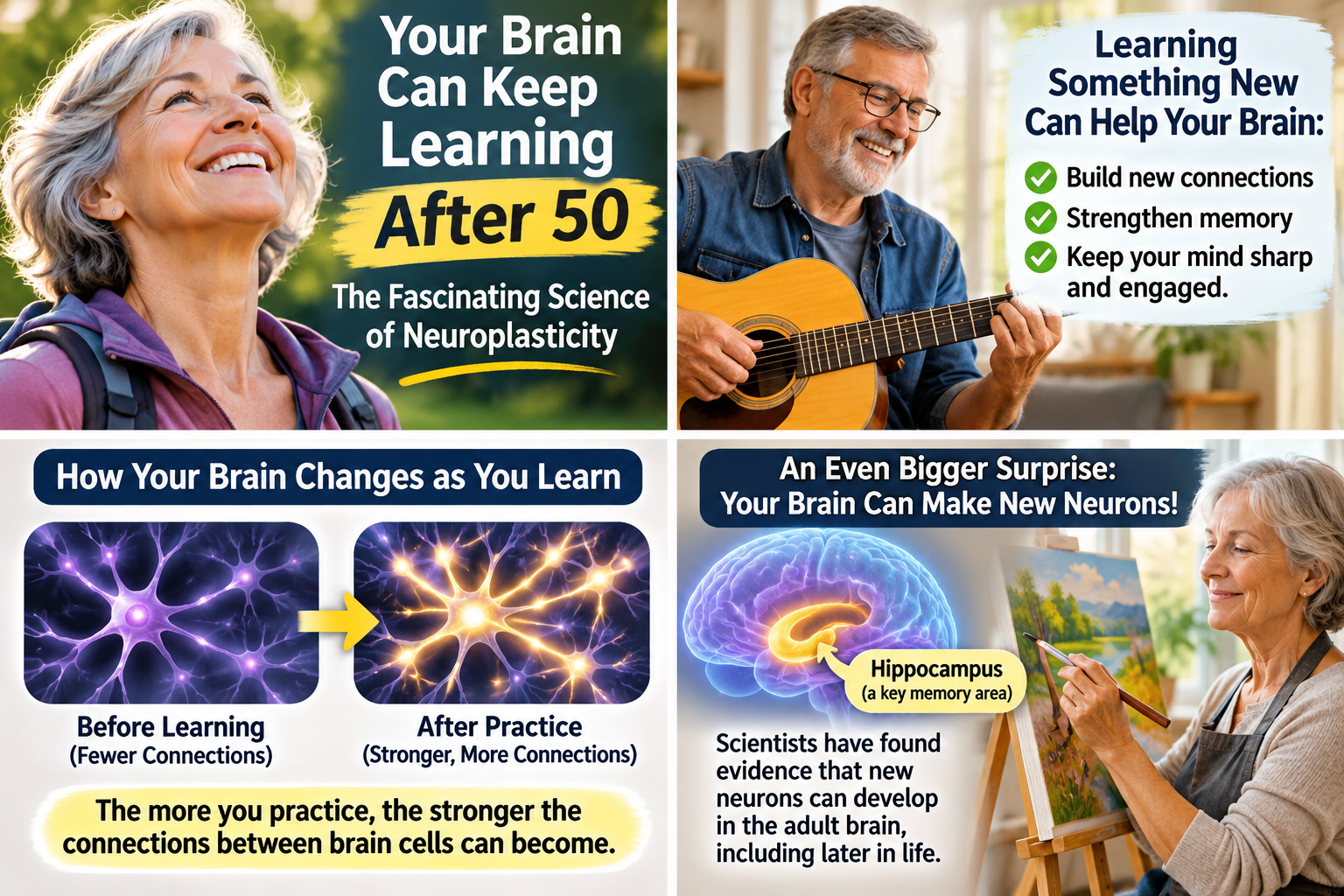
Yes! The National Institute on Aging explains that older adults can continue learning new skills, forming new memories, and improving vocabulary and language abilities.
Researchers have also tested whether older adults can get better at learning how to learn movement skills. In one study, older adults who practiced several different movement tasks improved their ability to learn new tasks compared with people who practiced only one task.
Think about what that means for everyday life. A new hobby, a new dance, or a new way of using technology can become an opportunity for discovery.
An Amazing Connection: Learning and Sleep
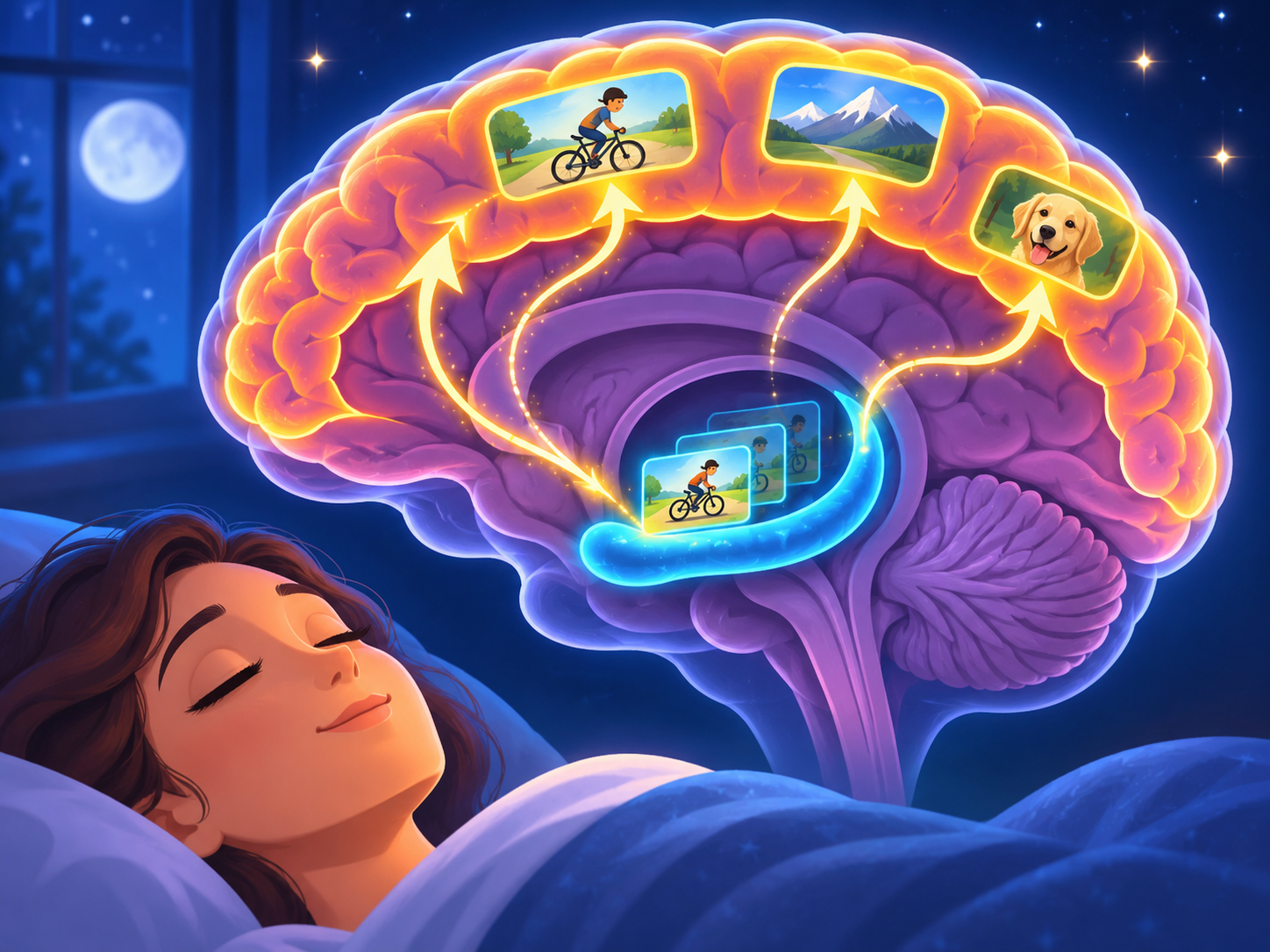
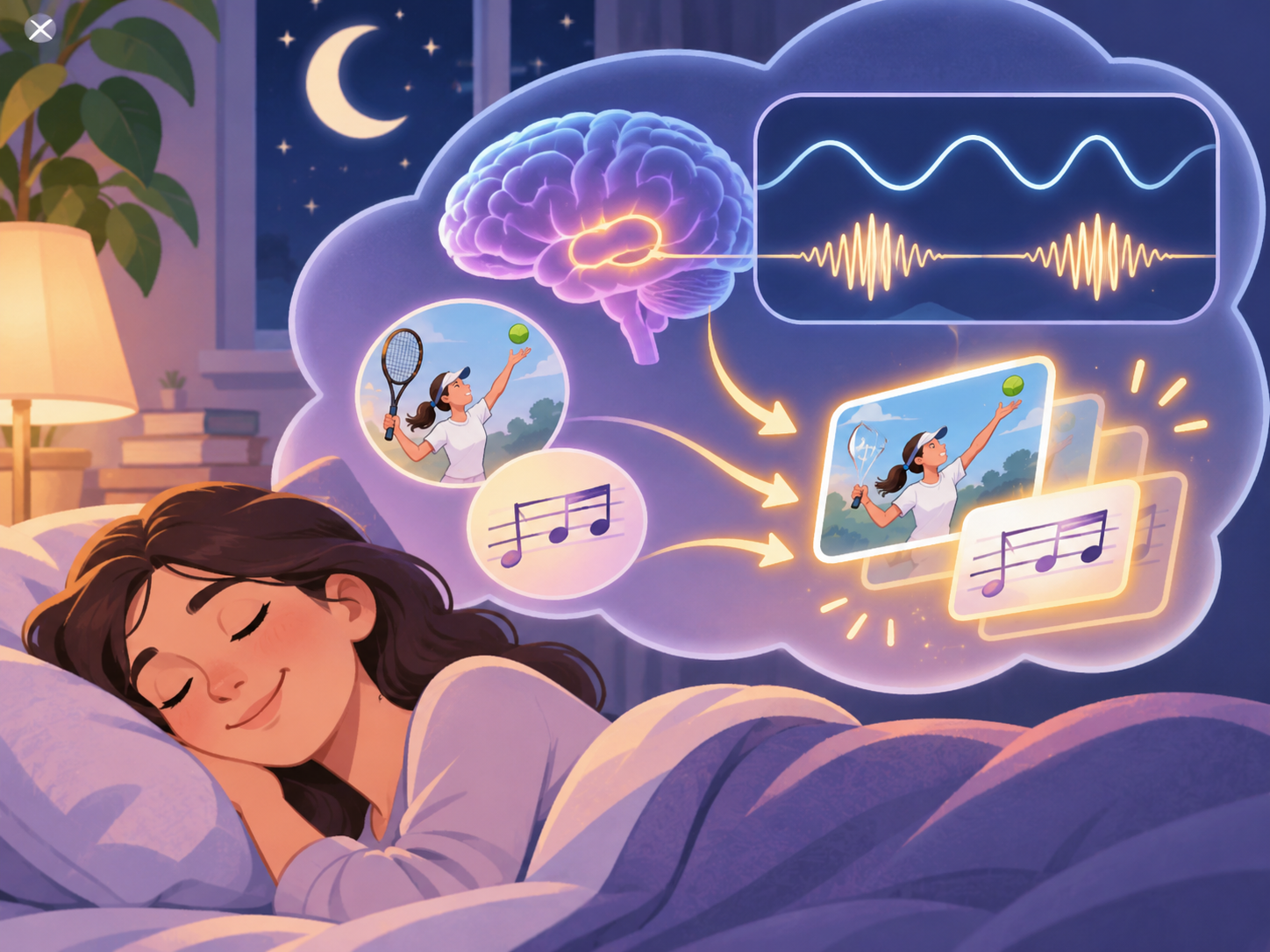
Learning doesn’t end when the practice session is over. Sleep helps the brain strengthen and organize some of the memories formed during the day.
Imagine practicing a tennis serve in the afternoon, then heading to bed that night. Your brain continues working with memories of what you practiced. For a closer look at this fascinating process, read our What Your Brain Does While You Sleep article.
Five Enjoyable Ways to Keep Learning
- Learn a new movement. Try a beginner dance class, a new swimming stroke, or a gentle tennis drill.
- Explore music. Practice a simple rhythm, learn a song, or begin playing an instrument.
- Learn a language. Start with a few useful words and practice them in short conversations.
- Try a creative hobby. Photography, drawing, and crafts invite you to solve new problems.
- Keep your body moving. Regular physical activity supports many aspects of brain and physical health.
Choose activities you genuinely enjoy. A challenge you look forward to is one you’re more likely to practice regularly.
What Does This Mean for Healthy Aging?
The most exciting lesson isn’t that everyone must become a juggler. It’s that the brain is a living, responsive organ. Research shows that older adults can learn, and brain-imaging studies demonstrate that certain kinds of learning can accompany changes in the brain itself.
Neuroplasticity is one piece of the bigger picture of brain health. Sleep, movement, social connections, nutrition, and managing medical conditions also matter.
If you enjoy exploring the connection between movement and healthy aging, our guide to growing stronger after 60 reveals another remarkable way your body responds to challenges.
Frequently Asked Questions
What is neuroplasticity in simple words?
Neuroplasticity means your brain can change how its cells communicate as you learn and gain experience. Some experiences can also be associated with changes in brain structure.
Can someone learn new skills at 90 or older?
Yes! Researchers have observed learning in people in their 90s. One study of adults averaging nearly 93 years old found that participants improved as they practiced a new memory task. Another study included adults up to age 95 and found that motor memories could be retained over time. Your brain’s ability to learn can continue well into later life.
Do I have to play brain games?
You have many choices. Learning movement skills, music, languages, and meaningful hobbies can all give your brain new things to work on. Choose what interests you.
Does sleep help when learning?
Sleep supports several forms of memory consolidation. It’s one reason regular practice and good sleep habits make a helpful combination.
The Fascinating Takeaway
The next time you try something new and think, “I’m not very good at this yet,” remember those juggling balls falling to the floor.
With every attempt, a living network of brain cells is responding to the challenge. A movement grows smoother. A name becomes familiar. A new skill begins to feel possible.
Your brain can keep learning—and that’s a discovery worth celebrating at every age.
Scientific References
- Boyke J, et al. Training-induced brain structure changes in the elderly. Journal of Neuroscience (2008).
- Voelcker-Rehage C, Willimczik K. Motor plasticity in a juggling task in older adults: A developmental study. Age and Ageing (2006).
- Seidler RD. Older adults can learn to learn new motor skills. Behavioural Brain Research (2007).
- National Institute on Aging. How the Aging Brain Affects Thinking.
- National Institute on Aging. Cognitive Health and Older Adults.
- White Matter Microstructural Correlates of Associative Learning in the Oldest-Old. (2023). Study of adults aged 90+.
- Smith CD et al. Memories that last in old age: motor skill learning and memory preservation. Neurobiology of Aging (2005).
- Dumitru I, et al. Identification of proliferating neural progenitors in the adult human hippocampus. Science (2025).
- Disouky A, et al. Human hippocampal neurogenesis in adulthood, ageing and Alzheimer’s disease. Nature (2026).
By Healthy Vitality Hub Editorial Team. This article provides general educational information.