
Right now, a whole world is living inside your mouth. Tiny organisms gather on your tongue, gums, and teeth. They form communities, share space, and respond to every bite of food you eat. Here’s the surprising part: many of these tiny residents are a normal part of a healthy mouth.
Meanwhile, your mouth has its own defense system. Saliva flows around your teeth, carries helpful minerals, and helps repair the earliest mineral loss in tooth enamel. Scientists are discovering just how remarkable this tiny world really is.
Quick answer: Your mouth contains a community of microbes called the oral microbiome. Saliva, daily cleaning, and balanced eating work together to support healthy teeth and gums.
A Hidden World on Every Tooth
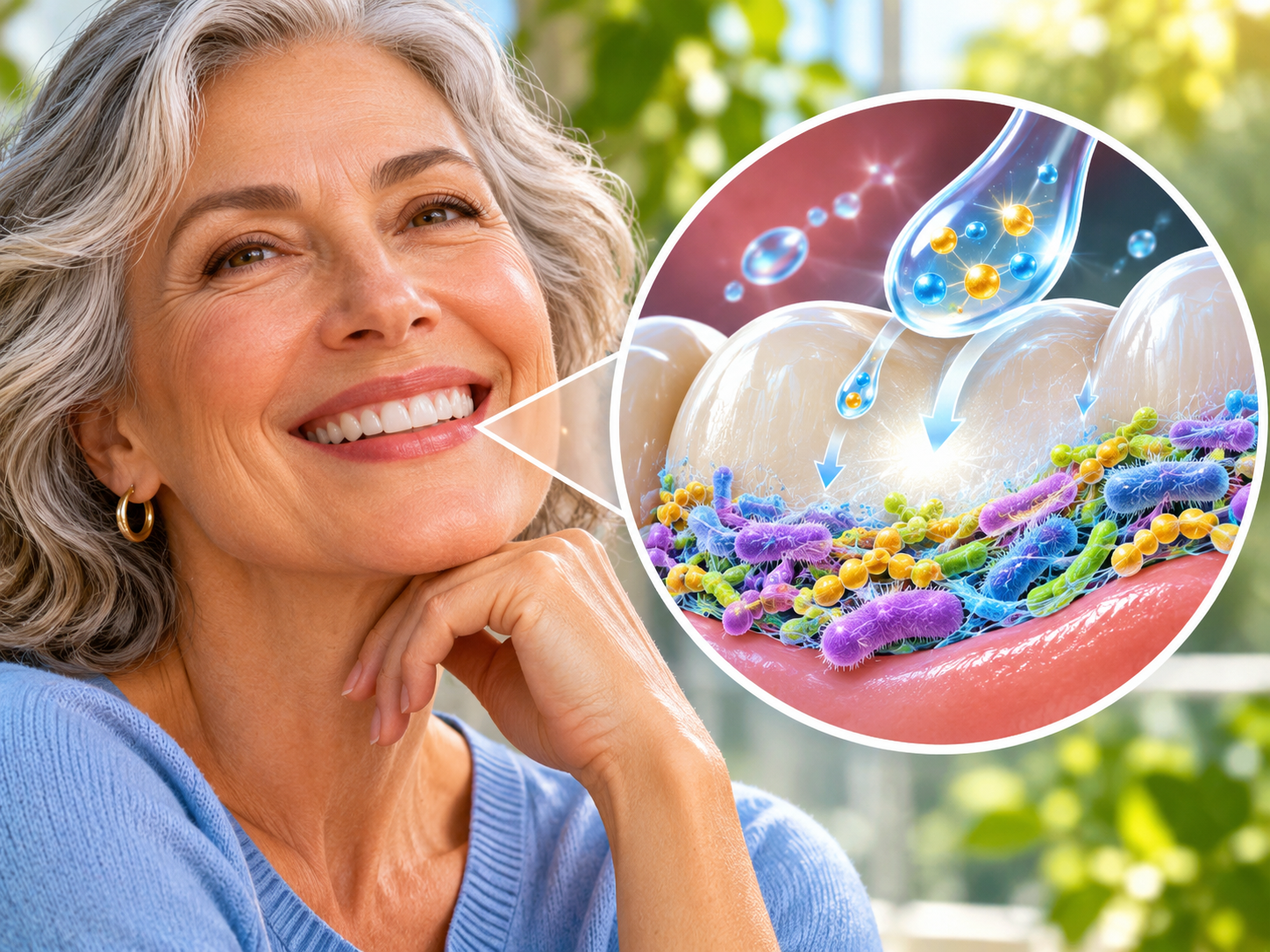
Imagine exploring an underwater reef. Some creatures cling to rocks. Others settle in sheltered corners. Each has its favorite home. Now imagine a world so tiny that you need a microscope to see it.
That’s one way to picture your mouth. Different microbes prefer different places: the rough surface of your tongue, the space near your gums, or the smooth surface of a tooth. Scientists call this community of microorganisms the oral microbiome.
Using powerful microscopes, researchers have discovered that microbes in dental plaque can arrange themselves in surprisingly organized neighborhoods. Some sit close together; others form layers. The tiny world on your teeth is more like a living community than a random scattering of germs.
What Is Dental Plaque, Really?
You may have heard your dentist talk about plaque. Plaque is a sticky layer of microbes and other materials that forms on teeth. Scientists also call it a biofilm.
Picture tiny builders forming a neighborhood. The bacteria attach to a surface and grow into a community. The community changes depending on what happens in your mouth.
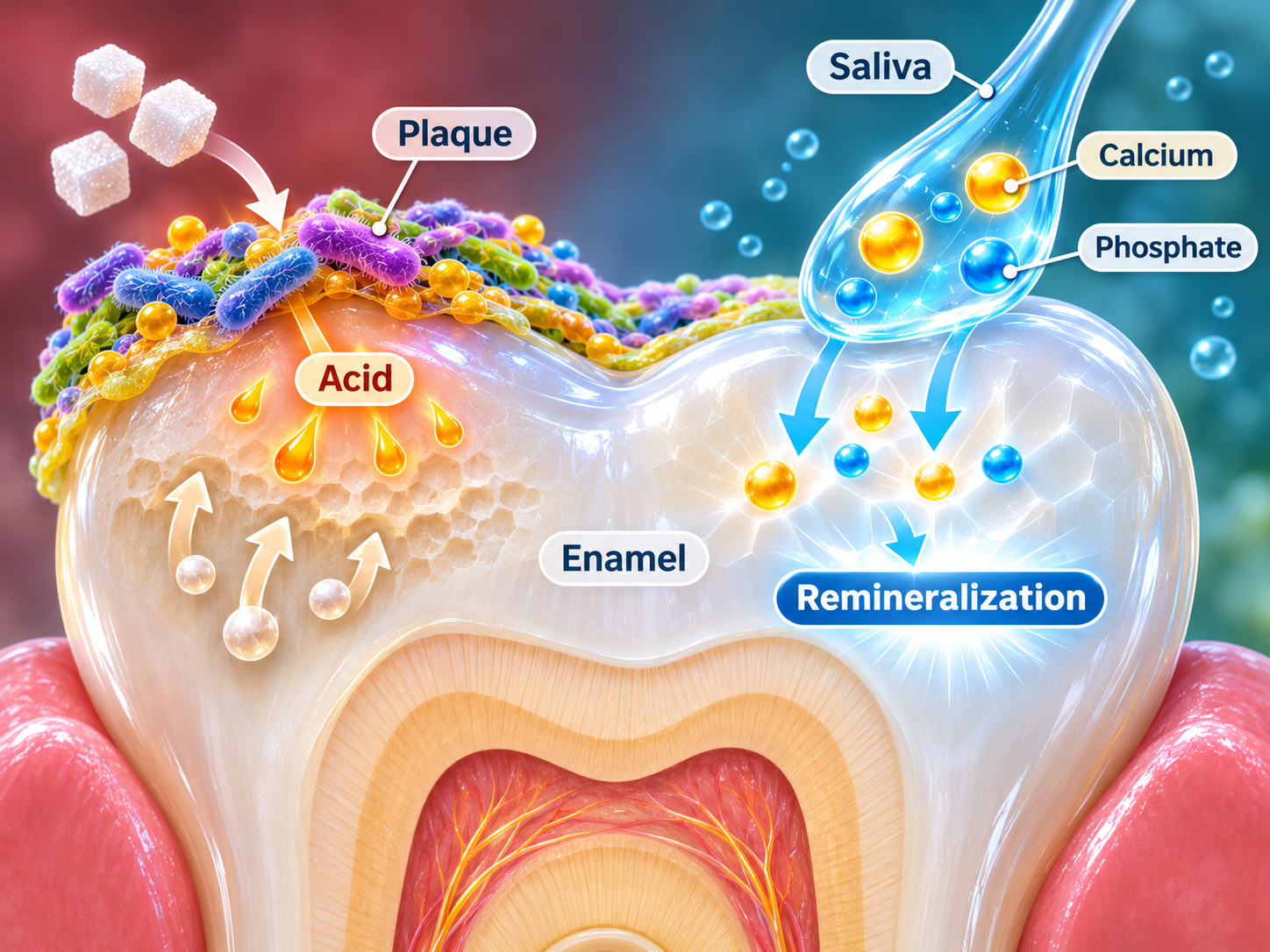
When certain bacteria feed on sugars and starches from food, they produce acids. Those acids can pull minerals from the hard outer layer of your teeth, called enamel. Scientists call this process demineralization.
Meet Your Mouth’s Remarkable Repair Team
Here comes a remarkable discovery: your tooth enamel is constantly losing tiny amounts of minerals and gaining them back. Your mouth has its own built-in mineral repair cycle.
Step 1: Minerals Leave the Enamel
After you eat or drink something containing sugar or starch, some bacteria make acids. The acids can draw minerals out of enamel.
Step 2: Saliva Comes to the Rescue
Your saliva helps wash away food particles and balance acids. It also carries calcium and phosphate, two minerals that can return to enamel. This natural rebuilding process is called remineralization.
Yes—your enamel can regain minerals after early mineral loss! This works especially well before a cavity forms. Once a hole develops in a tooth, a dentist usually needs to repair it.
Step 3: Your Teeth Have a Natural Repair System
Here’s an amazing discovery: Your saliva contains calcium and phosphate, two minerals that help rebuild areas of tooth enamel affected by everyday acids. This is called remineralization. Scientists have also studied how dental products, including fluoride toothpaste, can support this natural process.
The National Institute of Dental and Craniofacial Research explains that this daily contest between acids and minerals helps determine whether teeth stay strong.
Saliva: Much More Than Spit
Saliva does so many jobs that it’s easy to overlook. It moistens food so you can chew and swallow. It helps you taste. It washes your mouth and contains substances that help control some microbes.
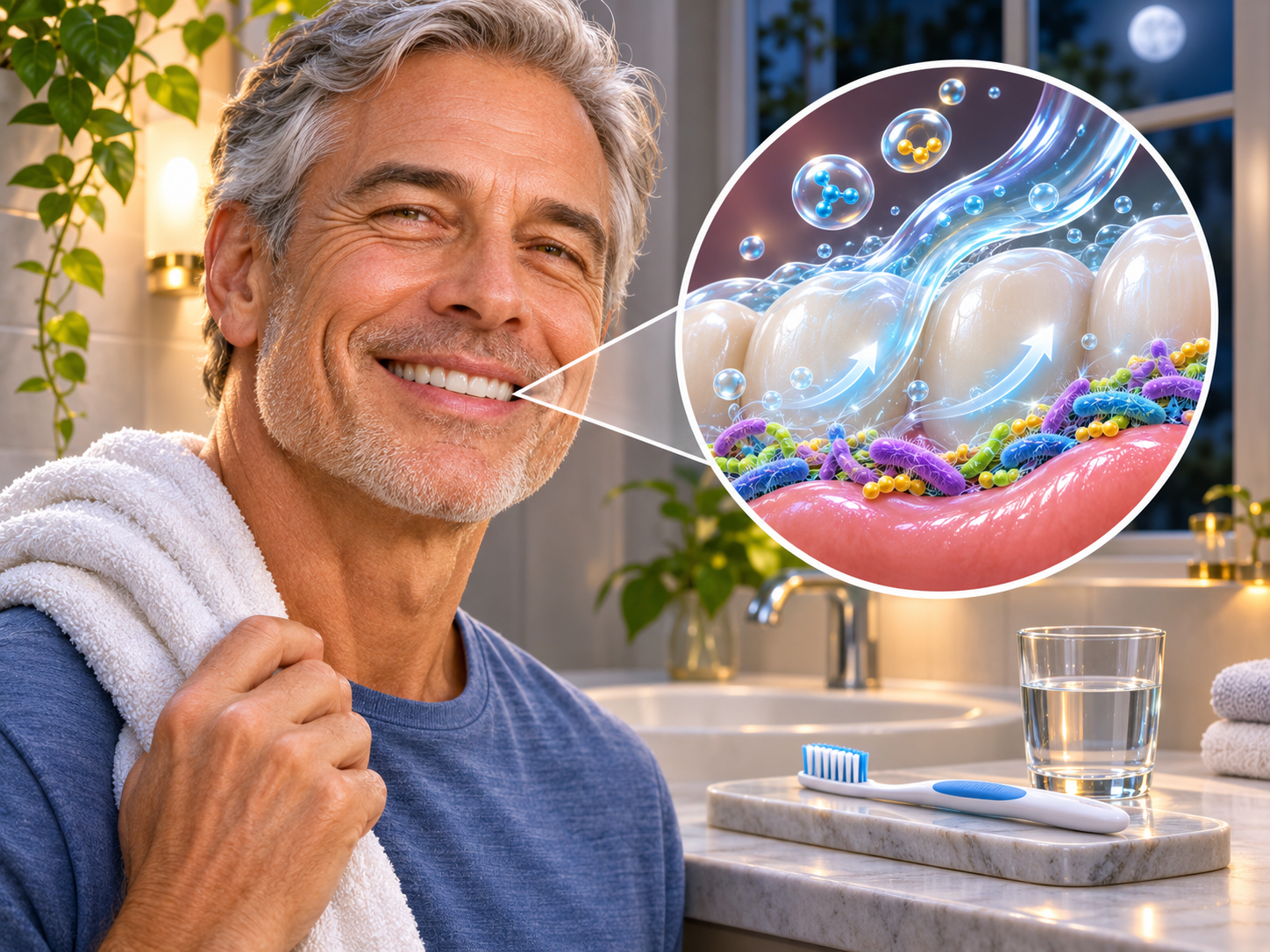
Salivary glands make saliva throughout the day, but saliva flow slows during sleep. That’s one reason your brushing routine before bed is so useful.
Some medications can also reduce saliva. If your mouth often feels dry, a dentist or healthcare professional can help identify the cause and suggest ways to protect your teeth.
Five Easy Ways to Help Your Mouth’s Natural Defenses
- Brush twice a day. Use a soft-bristled toothbrush. Fluoride toothpaste is a well-studied option for cavity prevention.
- Clean between your teeth. Floss or use an interdental cleaner to reach places the brush misses.
- Drink water regularly. Water helps rinse food particles away and supports saliva flow.
- Choose tooth-friendly snacks. Enjoy vegetables, nuts, or other nutritious foods, and keep sugary foods and drinks to a minimum to help protect your enamel.
- Keep regular dental visits. Dental professionals can spot early changes and help you protect your smile.
A New Frontier: The Oral Microbiome
Modern microscopes and DNA tools allow scientists to study whole communities of microbes, not just one kind at a time. They can even map where different microbes live in the same tiny patch of plaque.
That is opening a new window into oral health. Researchers are learning how microbial communities change when conditions in the mouth change. Their discoveries may help guide future ways to support healthy teeth and gums.
A Fascinating New Direction: Oral Probiotics
Scientists are studying another exciting question: Could beneficial bacteria called probiotics help support a balanced oral microbiome? Researchers have explored specific probiotic strains and their relationships with gum health and the tiny communities living in our mouths.
This growing area of science has inspired oral probiotic supplements, including ProDentim. Understanding the oral microbiome is a useful first step when exploring how different probiotic ingredients are studied.
Explore ProDentim and Its Oral Probiotic Formula
Frequently Asked Questions
Are all bacteria in the mouth harmful?
No. Many kinds of bacteria normally live in a healthy mouth. Oral health depends partly on how the whole community interacts with its environment.
Can tooth enamel repair itself?
Early mineral loss can sometimes be reversed. Saliva supplies the minerals that support remineralization, and certain dental products can give enamel extra protection.
Why does saliva matter so much?
It helps you chew, swallow, taste, wash away food, balance acids, and deliver minerals that support teeth.
The Amazing Takeaway
Your smile has a hidden support team. Tiny microbes form intricate communities. Saliva sweeps through the mouth carrying protective minerals. Your natural repair system stays busy while you talk, eat, laugh, and go about your day.
The more we learn about this tiny world, the more amazing everyday oral health becomes.
Scientific References
- National Institute of Dental and Craniofacial Research. The Tooth Decay Process: How to Reverse It and Avoid a Cavity.
- National Institute of Dental and Craniofacial Research. Dry Mouth.
- National Institute of Dental and Craniofacial Research. Fluoride & Dental Health.
- The Oral Microbiome: Diversity, Biogeography and Human Health. Nature Reviews Microbiology (2024).
- American Dental Association. Xerostomia (Dry Mouth): Salivary Flow and Oral Health.
By Healthy Vitality Hub Editorial Team. Educational information; seek individualized advice from a dental professional for personal concerns.
Leave a Reply