Author: Healthy Vitality Hub Editorial Team

  • How Mitochondria Turn Food Into Energy: The Science of ATP

    How Mitochondria Turn Food Into Energy: The Science of ATP

    Every second, your heart beats, your brain sends signals, and your muscles stay ready to move. All of that activity needs energy. But how does the energy in the food you eat become something your cells can actually use?

    Quick answer: Tiny structures called mitochondria help turn energy from food into a molecule called ATP. ATP is the usable energy supply that powers many of the jobs your cells perform.

    Meet Your Cells’ Energy Producers

    Mitochondria are tiny structures found inside nearly all human cells. Their nickname is the “powerhouses of the cell,” but the science is even more fascinating than that description suggests. According to the National Institutes of Health, mitochondria produce most of the energy cells need. Mitochondria do more than make ATP. For example, they help control calcium levels inside cells, send chemical signals that help cells respond to stress, and take part in the carefully controlled process that removes cells when they are badly damaged or no longer needed. NIH: Mitochondria and Health.

    Cells with high energy demands, including muscle cells, often have many mitochondria. They are not all identical, and the number can change as cells adapt to different demands.
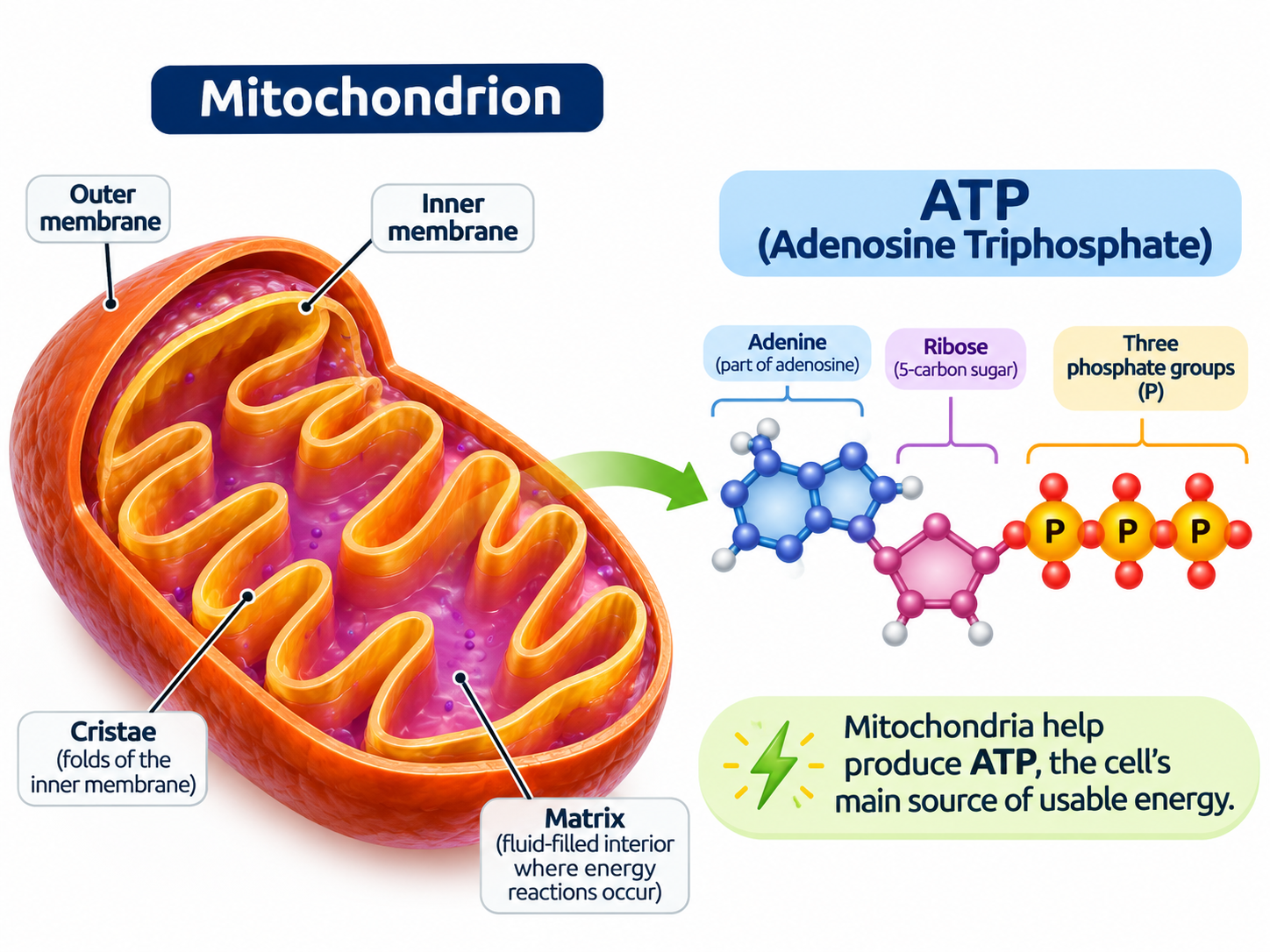
    Colorful diagram showing a mitochondrion and its structure
    Mitochondrion: the cell’s energy factory.

    What Exactly Is ATP?

    ATP stands for adenosine triphosphate. Think of it as a reusable energy-carrying molecule. Your cells can use ATP to power actions such as muscle contraction, nerve signaling, movement of materials, and the building of other molecules.

    ATP has three phosphate groups. When enzymes help remove the outer phosphate group, the reaction can release useful energy for cellular work. ATP becomes ADP—adenosine diphosphate—and cells can use energy from metabolism to build ATP again.

    The National Institute of General Medical Sciences explains that the body continuously makes and uses ATP, recycling it as life goes on.

    How Food and Oxygen Become Usable Energy

    Step 1: Food Provides Fuel

    Your digestive system breaks down carbohydrates, fats, and proteins. Cells can use products of that breakdown as fuel. Different pathways prepare these fuel molecules for the next stages of energy production.

    Step 2: Mitochondria Capture Energy

    Inside mitochondria, chemical reactions pass electrons through a series of proteins in the inner membrane. This electron transport chain uses energy from the electrons to move protons—tiny charged particles—across that membrane.

    Step 3: An Amazing Molecular Machine Makes ATP

    Inside the mitochondrion, tiny charged particles called protons build up on one side of the inner membrane. Then something remarkable happens: they flow back through a molecular machine called ATP synthase, making part of it spin!

    That spinning motion helps the machine join ADP with a phosphate group to create ATP—the energy-carrying molecule that powers so many jobs inside your cells.

    Scientists call this energy-making process oxidative phosphorylation. It is part of an incredible teamwork system: one set of proteins builds up the protons, and ATP synthase puts their flow to work.
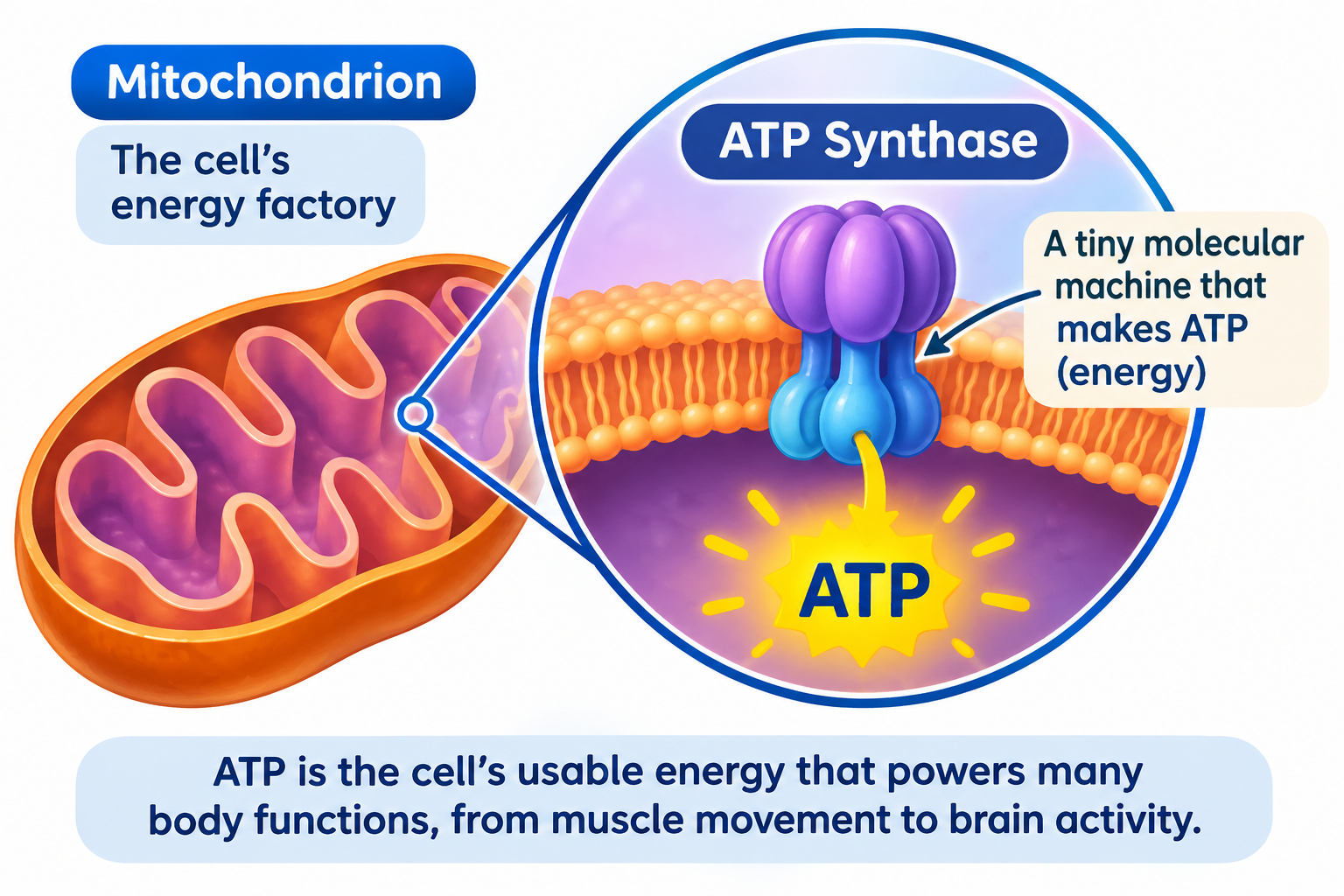
    Simple illustration of ATP synthase inside a mitochondrion producing ATP
    ATP synthase: a tiny machine that makes ATP.

    Why Do Muscles and the Brain Need So Much ATP?

    Muscle cells need ATP to contract and then relax. Nerve cells need energy to maintain the electrical conditions that let them send signals. ATP also helps cells build and repair important molecules.

    That is why mitochondrial energy production matters throughout the body—not just when you exercise. Even while you rest, your cells remain busy.

    Mitochondria and Healthy Aging

    Researchers are studying how mitochondria change with age and how those changes relate to strength, mobility, and other aspects of health. A 2023 research review involving National Institute on Aging scientists discusses mitochondrial function as a possible factor in age-related mobility changes. These findings open exciting possibilities for understanding how mitochondrial health contributes to healthy aging. Tian and colleagues: Mitochondria and Mobility in Aging.

    The most useful everyday takeaway is simple: energy metabolism relies on functioning cells, nutritious food, and the many systems that support physical activity and overall health.

    What Supports Everyday Energy Health?

    • Eat a varied diet. Your body needs enough overall energy and essential nutrients. Explore our 12 nutrient-rich foods for healthy aging.
    • Move regularly. Physical activity challenges muscles and helps the body adapt to energy demands.
    • Get enough sleep. Healthy sleep supports many aspects of physical and mental functioning.
    • Pay attention to persistent fatigue. Ongoing or unexplained tiredness can have many causes and deserves appropriate medical evaluation.

    Frequently Asked Questions

    Are mitochondria found in every cell?

    They are found in almost all human cells. Mature red blood cells are a notable exception.

    Is ATP the same as the food we eat?

    No. Food supplies fuel; ATP is a molecule cells make and use to carry energy into specific chemical reactions.

    Do mitochondria only produce energy?

    No. They also participate in calcium regulation, cellular signaling, and other essential activities.

    Why are researchers interested in mitochondrial nutrition?

    Scientists are studying how nutrients and specific compounds interact with energy-producing pathways. Research on human outcomes helps us understand which approaches may be most useful.

    Final Takeaway

    Inside almost every cell, remarkable molecular systems are working to keep you alive. Mitochondria take part in turning the energy from food into ATP, and ATP helps power countless everyday tasks—from thinking to moving. Understanding this process gives us a deeper appreciation for the science of healthy living.

    Scientific References

    1. National Institutes of Health (2025): Mitochondria and Health
    2. National Institute of General Medical Sciences (2022): ATP’s Amazing Power
    3. NCBI Bookshelf: The Mitochondrion
    4. Tian et al. (2023): Energizing Mitochondria to Prevent Mobility Loss in Aging

    By Healthy Vitality Hub Editorial Team. Educational information only; not individualized medical advice.
  • Tart Cherry and Sleep: What Human Studies Really Show

    Tart Cherry and Sleep: What Human Studies Really Show

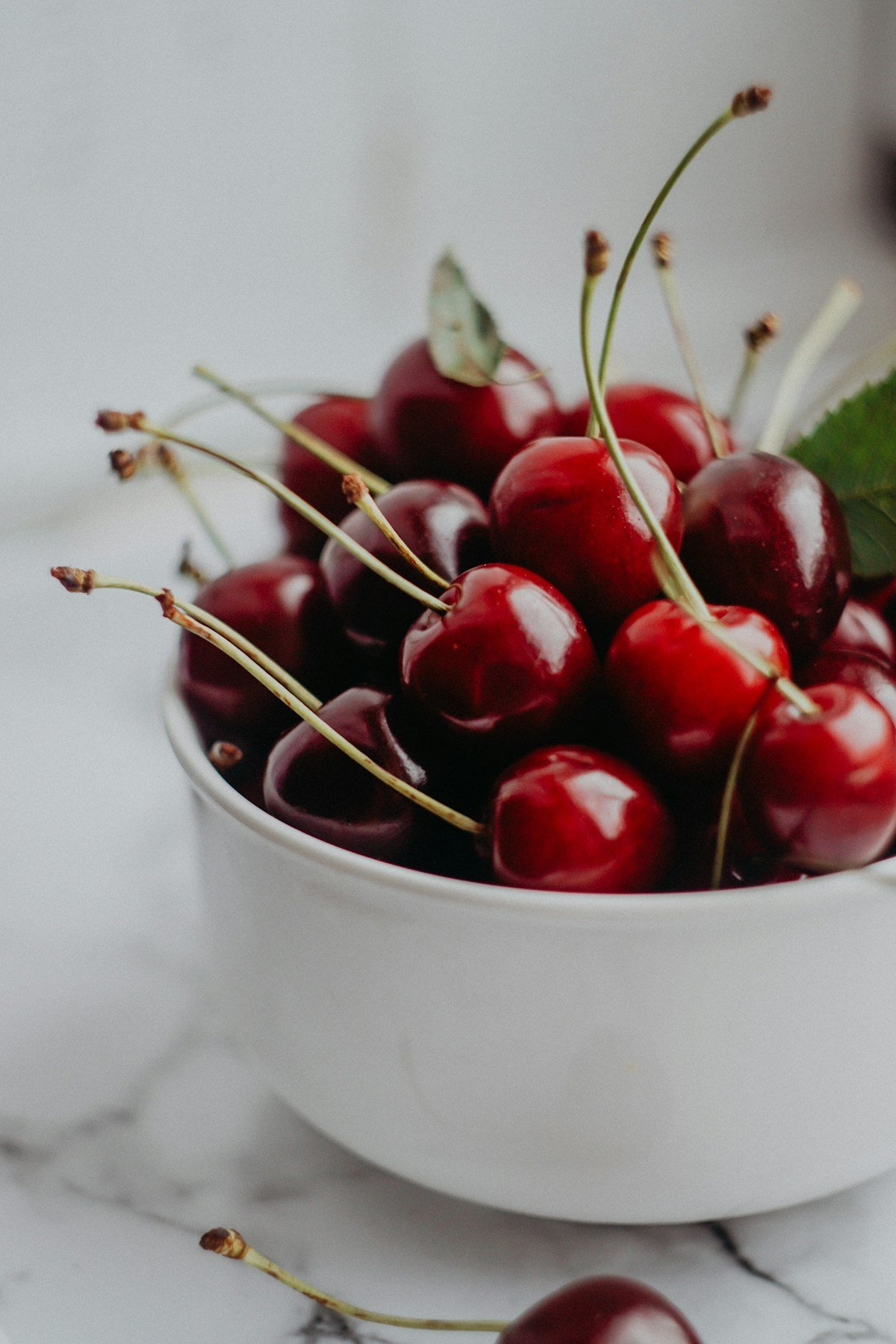
    Could a glass of tart cherry juice help you sleep more comfortably? Researchers have explored this colorful fruit for a surprising reason: tart cherries contain plant compounds and naturally occurring melatonin, a hormone involved in our sleep-wake timing.

    Quick answer: Human clinical trials have reported encouraging findings for certain tart cherry juice preparations, including changes in sleep duration and sleep efficiency. The results vary by study, so it is important to look at what the researchers actually tested.

    What Makes Tart Cherries Interesting for Sleep?

    Tart cherries—often Montmorency cherries—contain polyphenols, including anthocyanins, which give cherries their deep red color. They also contain naturally occurring melatonin. Researchers are exploring how these substances, and pathways involving tryptophan, might relate to sleep.

    An important detail: studies generally examine particular tart cherry juice or concentrate preparations. These findings make tart cherry a particularly interesting ingredient to explore in sleep-support formulas.

    What Have Human Studies Found?

    2012: Tart Cherry Concentrate, Melatonin and Sleep

    In a randomized, placebo-controlled crossover trial, researchers gave healthy adults tart cherry juice concentrate or a comparison drink. They measured sleep using activity monitors and questionnaires, along with a marker of melatonin in urine. During the tart cherry period, the researchers reported increases in total sleep time and sleep efficiency, as well as higher melatonin measures. This finding offers a reason to study tart cherries further. [Howatson et al., European Journal of Nutrition]

    2010: Tart Cherry Juice and Older Adults

    Another randomized crossover study examined tart cherry juice in older adults experiencing insomnia. Compared with placebo, the study reported improvement in time awake after falling asleep and an insomnia severity measure. Other measures, including total sleep time, did not improve significantly compared with placebo. [Pigeon et al., Journal of Medicinal Food]

    2018: A Closer Look at Sleep Time

    In a placebo-controlled crossover trial involving adults with insomnia, researchers measured sleep using overnight testing. Among eight participants who completed the study, the tart cherry juice period was associated with an average increase of 84 minutes in sleep time. This encouraging result gives researchers another reason to investigate tart cherry juice and sleep. [Losso et al., American Journal of Therapeutics]

    How Tart Cherry Might Relate to the Sleep-Wake Cycle

    Melatonin helps signal when it is nighttime. Tart cherries naturally contain melatonin, and one human study found changes in melatonin measures after consumption of tart cherry concentrate.

    Scientists are also studying tart cherry polyphenols and their relationship to inflammation and tryptophan metabolism. Together, these pathways offer promising directions for scientists studying how tart cherries may support healthy sleep.

    Whole Cherries, Juice, or Concentrate?

    The human sleep studies cited here used juice or juice concentrate under specific study conditions. Whole tart cherries can still be enjoyed as part of a nutritious eating pattern, but eating a bowl of cherries should not be presented as equivalent to the studied doses. Juice and concentrates can also contain substantial natural sugars, so serving size matters.

    Where Does Yu Sleep Fit In?

    Tart cherry concentrate is one of the ingredients included in the Yu Sleep liquid supplement. If you are curious about how it fits alongside melatonin, magnesium glycinate, and other ingredients, read our Yu Sleep Review: Ingredients, Benefits, Pricing, and Is It Worth Trying?. That review covers the actual product formula and purchase options. The clinical trials described above studied tart cherry preparations, not the finished Yu Sleep formula.

    Simple Habits That Support Better Sleep

    • Keep a fairly consistent bedtime and wake-up time.
    • Get daylight exposure during the day.
    • Create a comfortable, dark and quiet sleeping environment.
    • Limit caffeine late in the day if it interferes with sleep.
    • Speak with a clinician about ongoing insomnia or troubling sleep symptoms.

    Frequently Asked Questions

    Does tart cherry contain melatonin?

    Yes. Tart cherries contain naturally occurring melatonin, although amounts can vary by variety and preparation.

    Has tart cherry been studied in humans?

    Yes. Researchers have conducted randomized, placebo-controlled human trials examining tart cherry juice or concentrate and sleep-related outcomes.

    The Bottom Line

    Tart cherry is an intriguing food with research worth following. Human studies have explored its relationship with melatonin and sleep, making it a useful topic for anyone interested in the science of nighttime wellness. The strongest approach is to understand what each study found and use that information as one part of a healthy sleep routine.

    Scientific References

    1. Howatson G, et al. Effect of tart cherry juice on melatonin levels and enhanced sleep quality. European Journal of Nutrition (2012).
    2. Pigeon WR, et al. Effects of a Tart Cherry Juice Beverage on the Sleep of Older Adults with Insomnia. Journal of Medicinal Food (2010).
    3. Losso JN, et al. Pilot Study of Tart Cherry Juice for the Treatment of Insomnia and Investigation of Mechanisms. American Journal of Therapeutics (2018).

    By Healthy Vitality Hub Editorial Team. This article is for general education and is not a substitute for individualized medical advice.

  • Best Foods for Healthy Aging: 12 Nutrient-Rich Choices

    Best Foods for Healthy Aging: 12 Nutrient-Rich Choices

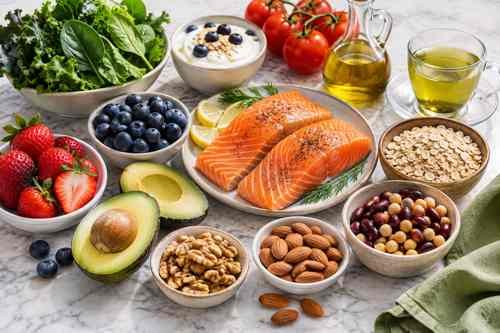
    Growing older doesn’t mean giving up the foods you love. It means choosing foods that give your body protein, fiber, vitamins, minerals, and healthy fats. The good news? Many excellent choices are familiar grocery-store favorites.

    These 12 foods were selected for their nutritional value and their place in established healthy-eating guidance from the National Institutes of Health and other authoritative nutrition sources. They are not an official ranked list.

    Quick answer: Choose a variety of colorful plants, whole grains, satisfying protein sources, and calcium-rich foods. Here are 12 nutritious choices to explore.

    12 Foods Worth Adding to Your Grocery List

    1. Blueberries and Other Berries

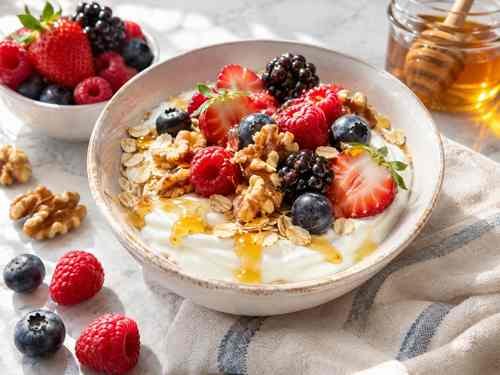
    Berries offer fiber and colorful plant compounds called polyphenols. Add them to oatmeal, plain yogurt, or a fruit salad.

    Berries with oats and walnuts over a bowl of yogurt
    Berries, yogurt, oats, and walnuts make an inviting breakfast.

    2. Leafy Greens

    Spinach, kale, and collard greens provide folate, vitamin K, and other nutrients. Add them to soup or sauté them with garlic.

    3. Salmon and Other Oily Fish

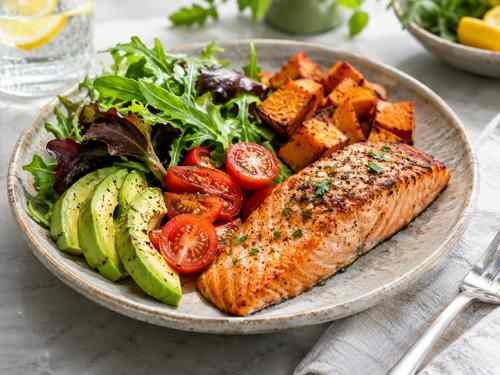
    Salmon, sardines, and trout provide protein and omega-3 fats. Enjoy baked fish or add canned salmon to a salad.

    Salmon with leafy greens avocado tomatoes and roasted sweet potatoes
    Salmon and colorful vegetables are an easy way to build a nutritious meal.

    4. Beans

    Black beans, chickpeas, and kidney beans combine protein and fiber. Try them in soups, tacos, and grain bowls.

    5. Lentils

    Lentils bring plant protein, iron, and fiber to the table. They cook quickly and make an easy, hearty soup.

    6. Oatmeal

    Whole oats contain soluble fiber and make a satisfying breakfast. Add berries, cinnamon, or walnuts.

    7. Walnuts

    Walnuts provide unsaturated fats and plant omega-3 fats. Sprinkle a handful over cereal or salads.

    8. Plain Yogurt or Fortified Soy Yogurt

    Choose an unsweetened variety. Yogurt can contribute protein and calcium; check plant-based labels for calcium and vitamin D fortification.

    9. Eggs

    Eggs provide protein along with vitamin B12 and choline. Try them scrambled with vegetables or hard-boiled for lunch.

    10. Sweet Potatoes

    Sweet potatoes offer fiber and beta-carotene, which the body can convert to vitamin A. Bake them and top with black beans.

    11. Broccoli

    Broccoli provides fiber, vitamin C, and other plant nutrients. Roast or steam it for a quick side dish.

    12. Tofu and Edamame

    Soy foods provide plant protein. Calcium-set tofu can also contribute calcium. Try a tofu stir-fry or steamed edamame.

    Why These Foods Matter as We Age

    The National Institute on Aging recommends a varied eating pattern with vegetables, fruits, whole grains, protein foods, and dairy or fortified alternatives. Protein helps build and maintain tissues, fiber supports healthy digestion, and calcium supports bones. No single food does everything: the combination is what matters.

    A Simple One-Day Meal Idea

    • Breakfast: Oatmeal with berries and walnuts.
    • Lunch: Chickpea and spinach salad with olive oil.
    • Snack: Plain yogurt or calcium-fortified soy yogurt.
    • Dinner: Salmon or tofu with roasted broccoli and a baked sweet potato.

    Frequently Asked Questions

    What are the best foods for healthy aging?

    A varied mix of vegetables, fruits, whole grains, beans, nuts, seafood or other proteins, and calcium-rich foods creates a useful foundation.

    Do I need to eat every food on this list?

    No. Pick the foods you enjoy and rotate them throughout the week.

    Can a plant-based eating pattern support healthy aging?

    Yes. Beans, lentils, tofu, vegetables, whole grains, fruit, and nuts offer a wide range of nutrients. People following a fully plant-based diet should include a reliable source of vitamin B12.

    Final Takeaway

    Healthy aging begins with simple, enjoyable choices. Try two or three foods from this list, find ways you like to prepare them, and build a colorful plate you look forward to eating.

    Sources

    1. National Institute on Aging — Healthy Eating as You Age
    2. NIDDK — Health Tips for Older Adults
    3. Dietary Guidelines for Americans — Build a Healthy Eating Routine as You Get Older

    Healthy Vitality Hub provides general educational information, not individualized medical advice.
  • Yu Sleep Review: Ingredients, Benefits, Pricing, and Is It Worth Trying?

    Yu Sleep Review: Ingredients, Benefits, Pricing, and Is It Worth Trying?

    Affiliate Disclosure: We may earn compensation when you purchase through links in this article, at no additional cost to you.

    An ingredient-focused look at Yu Sleep’s liquid sleep-support formula, its potential advantages, pricing, and what shoppers should know.

    It’s 3:00 AM. Are you peacefully asleep—or staring at the ceiling wondering why you’re still awake? For many adults, the second scene feels all too familiar. Bedtime arrives, the lights go out, but a busy mind doesn’t always cooperate.

    Yu Sleep combines a disclosed 0.9 mg dose of melatonin with red tart cherry concentrate, magnesium glycinate, L-theanine, and other ingredients associated with relaxation and sleep-related research. Instead of relying on melatonin alone, it takes a multi-ingredient approach.

    One ingredient in particular makes this formula worth a closer look: red tart cherry concentrate. Scientists have investigated tart cherry preparations in human sleep studies. But what do those findings really tell us about Yu Sleep? Let’s separate the interesting science from the marketing claims.

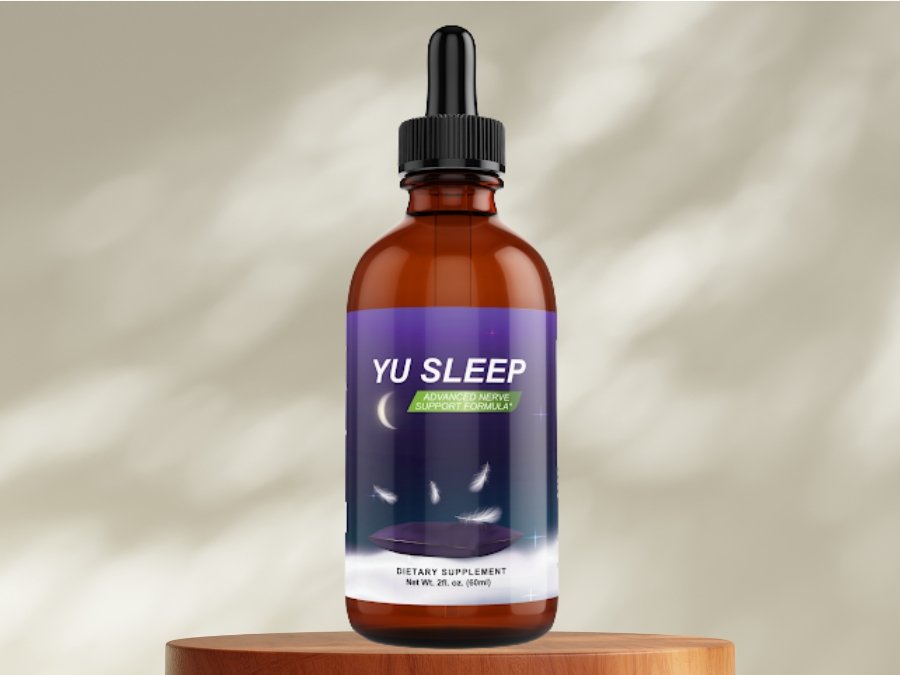
    Yu Sleep liquid sleep-support supplement bottle
    Yu Sleep liquid dietary supplement
    Fresh cherries — learn more about Yu Sleep and its tart cherry ingredientsCurious About Tart Cherry and Sleep?LEARN MORE →
    Opens Yu Sleep’s official video sales presentation (affiliate link).

    Yu Sleep at a Glance

    Product Yu Sleep
    Type Liquid dietary supplement
    Melatonin 0.9 mg per 2 mL serving
    Other ingredients Red tart cherry, magnesium glycinate, L-theanine, lemon balm, apigenin, GABA, 5-HTP, vitamins B2 and B6
    Serving 2 mL (approximately two droppers)
    Servings per bottle Approximately 30
    Advertised starting price $39 per bottle in the six-bottle offer, subject to checkout verification
    Return period 60 days

    Our Quick Take

    Yu Sleep is worth considering for adults who want a convenient liquid supplement combining low-dose melatonin with several botanical and nutritional ingredients. We particularly like the easily understood melatonin amount and the inclusion of tart cherry concentrate, which has been examined in human sleep studies.

    The combined formula may appeal to buyers who prefer one nighttime product rather than several separate supplements. As always, the best choice depends on your personal sleep-support goals and preferences.

    Check Current Yu Sleep Prices →

    What Makes Yu Sleep Different?

    1. A Convenient Liquid Format

    Yu Sleep comes in a dropper bottle instead of capsules or tablets. That may suit people who dislike swallowing pills or simply want a straightforward addition to their nighttime routine. The convenient liquid format makes Yu Sleep easy to add to a nighttime routine.

    2. A Lower, Clearly Disclosed Melatonin Dose

    Yu Sleep’s listed 0.9 mg melatonin serving is lower than many products sold at 3 mg, 5 mg, or more. Some shoppers value a lower-dose option; the right dose still depends on the person and reason for taking it.

    3. Several Sleep-Related Ingredients Together

    Besides melatonin, the formula includes tart cherry concentrate, magnesium glycinate, L-theanine, lemon balm, apigenin, GABA, and 5-HTP. Each has its own scientific or traditional-use background. Together, these ingredients give Yu Sleep a convenient, multi-ingredient approach to nighttime relaxation and sleep support.

    Yu Sleep Ingredients: What Does the Research Say?

    Melatonin: The Body’s Natural Timing Signal

    Melatonin is a hormone involved in regulating the body’s sleep–wake cycle. Its natural production typically increases in darkness, signaling biological nighttime. Researchers have studied melatonin particularly for circadian-rhythm and certain sleep-timing problems. The U.S. National Center for Complementary and Integrative Health explains that its usefulness varies by condition.

    Why it matters: Melatonin has a well-established role in sleep timing, and Yu Sleep discloses a relatively low 0.9 mg amount.

    Stylized sleep-wake body clock and moon illustration
    Illustration: Melatonin helps communicate nighttime timing to the body’s internal clock.

    Red Tart Cherry Concentrate: A Particularly Interesting Ingredient

    Tart cherries naturally contain melatonin and plant compounds called polyphenols. In a randomized, placebo-controlled study, tart cherry juice concentrate was associated with improvements in total sleep time and sleep efficiency. Another study involving older adults also examined tart cherry juice for insomnia-related measures.

    These findings make tart cherry a legitimate subject of sleep research, rather than merely a fashionable label ingredient. These findings make tart cherry an especially interesting ingredient in Yu Sleep’s nighttime-support formula.

    Why we like it: Tart cherry has a plausible biological connection to sleep and promising human research.

    Illustration of a bowl filled with red tart cherries
    Tart cherry is one of the ingredients in the Yu Sleep formula.

    Magnesium Glycinate: Normal Nerve and Muscle Function

    Magnesium is an essential mineral involved in hundreds of biological processes, including muscle and nerve function. Magnesium glycinate is a commonly used supplement form. Its role in supporting normal nerve and muscle function makes magnesium a relevant ingredient in Yu Sleep’s nighttime wellness formula.

    L-Theanine: Relaxation-Related Research

    L-theanine is an amino acid naturally found in tea. Researchers have investigated its effects on perceived stress, relaxation, and sleep-related outcomes. Encouraging research into its calming properties makes L-theanine a natural fit for Yu Sleep’s nighttime-support formula.

    Lemon Balm: A Traditional Calming Herb

    Lemon balm (Melissa officinalis) has a long history of use in calming herbal preparations. Modern studies have investigated extracts for relaxation and certain sleep-related measures. Its traditional use and emerging research into relaxation make lemon balm a fitting botanical in Yu Sleep’s nighttime-support blend.

    Apigenin: A Plant Flavonoid

    Apigenin is found in plants such as chamomile. Scientists have explored its biological activity, including pathways relevant to relaxation. Its connections to relaxation-related biological pathways make apigenin an interesting addition to Yu Sleep’s botanical blend.

    GABA: A Nervous-System Messenger

    GABA is an important neurotransmitter in the brain. Researchers have also explored GABA supplements for relaxation and sleep-related outcomes. Its role in nervous-system signaling makes it a relevant ingredient in Yu Sleep’s nighttime-support blend.

    5-HTP: Related to Serotonin Pathways

    5-HTP is used by the body in producing serotonin, a chemical involved in multiple biological processes. Researchers have studied 5-HTP in connection with sleep and serotonin-related pathways, making it another ingredient of interest in Yu Sleep’s nighttime-support blend.

    Vitamins B2 and B6

    Yu Sleep includes 0.5 mg each of vitamins B2 and B6. Both are essential nutrients that support normal metabolism; B6 also participates in neurotransmitter-related pathways. Together, vitamins B2 and B6 contribute nutritional support to Yu Sleep’s broader nighttime wellness formula.

    Why the Combination Formula May Appeal

    Sleep timing, relaxation, and nervous-system function involve different biological processes. Yu Sleep brings together ingredients associated with several of those processes in one product. The main advantage is practical convenience for shoppers who want a combination supplement.

    The manufacturer lists seven ingredients together in a 637 mg proprietary blend without disclosing individual amounts. Yu Sleep brings these ingredients together in a convenient proprietary blend designed for nighttime support.

    What We Like About Yu Sleep

    • Liquid dropper format: convenient for people who prefer not to swallow capsules.
    • Disclosed melatonin amount: 0.9 mg per serving.
    • Tart cherry concentrate: an ingredient with some encouraging preliminary human sleep research.
    • Combination approach: several botanical and nutritional ingredients in one product.
    • Package choices: smaller and larger supplies to suit different budgets.
    • 60-day return policy: the seller offers a 60-day window to request a refund.
    Yu Sleep bottle — select to learn more and see the official offerLEARN MORE ABOUT YU SLEEP →
    View the vendor’s video sales presentation through our affiliate link.

    Yu Sleep Pricing and Package Options

    The affiliate offer previously reviewed advertised these packages. Prices are promotional and must be confirmed on the live checkout page before purchase.

    Package Advertised per bottle Advertised product total
    1 bottle / approximately 30 days $69 $69
    3 bottles / approximately 90 days $59 $177
    6 bottles / approximately 180 days $39 $234

    On those advertised figures, six bottles offer the lowest per-bottle price; a single bottle requires the smallest initial purchase. Some versions of the sales offer advertise free shipping for multiple-bottle purchases. Check the current price at checkout.

    See Current Yu Sleep Packages →

    What About the 60-Day Guarantee?

    Yu Sleep comes with a 60-day refund window. If you decide to request a refund, contact the seller’s support team and follow the return instructions.

    Important Ingredient Note

    Yu Sleep contains 5-HTP, which may interact with certain antidepressants and other medications affecting serotonin. If you take these medications, check with your healthcare provider before using Yu Sleep.

    Who Might Consider Yu Sleep?

    • Adults who prefer liquids rather than capsules.
    • Shoppers who want a relatively low, clearly listed melatonin amount.
    • People interested in tart cherry and botanical nighttime ingredients.
    • Buyers who appreciate the convenience of a combination formula.

    Our Final Verdict: Is Yu Sleep Worth Trying?

    Yes. We recommend Yu Sleep as an option worth considering for adults looking for a convenient, multi-ingredient sleep-support supplement.

    What makes Yu Sleep particularly interesting is its combination of low-dose melatonin, red tart cherry concentrate, magnesium glycinate, and several botanical ingredients associated with nighttime relaxation. We especially like the inclusion of tart cherry, which has been investigated in human studies examining sleep quality and duration.

    The liquid format is another appealing feature for people who prefer a simple, dropper-based nighttime routine rather than capsules. While results naturally vary, Yu Sleep offers an interesting combination of ingredients for adults exploring sleep-support options.

    Our recommendation: If you’re interested in a liquid sleep-support formula rather than a basic melatonin-only supplement, Yu Sleep deserves a closer look. Explore Yu Sleep’s blend of ingredients and see how it fits your nighttime routine.

    Check Current Yu Sleep Prices and Packages →

    Frequently Asked Questions

    Does Yu Sleep contain melatonin?

    Yes. The disclosed formula lists 0.9 mg per 2 mL serving.

    Does Yu Sleep contain tart cherry?

    Yes. Red tart cherry concentrate is included in its proprietary blend.

    Has tart cherry been studied for sleep?

    Yes. Human studies have reported improvements in certain sleep measures using tart cherry preparations. This makes tart cherry a particularly interesting ingredient in Yu Sleep’s formula.

    Is Yu Sleep a prescription sleeping medication?

    No. It is marketed as a dietary supplement, not as a prescription treatment for insomnia.

    How many servings are in a bottle?

    The listed formula provides approximately 30 servings per bottle.

    Does Yu Sleep have a refund policy?

    The ClickBank-linked seller describes a 60-day return period.

    Scientific References and Product Information

    1. National Center for Complementary and Integrative Health — Melatonin: What You Need to Know
    2. Howatson et al. — Tart cherry juice, melatonin and sleep quality
    3. Pigeon et al. — Tart cherry juice and sleep among older adults
    4. Yu Sleep — ClickBank-linked refund policy

    Editorial note: Healthy Vitality Hub evaluates products using disclosed formulation information and published research. We have not personally tested Yu Sleep. This article is educational, not medical advice.