
Imagine this: You learn a new tennis move, meet someone new, or read a fascinating fact in the afternoon. Then you go to bed. While you sleep, your brain is still busy. It is working with the information you collected during the day, helping some memories become easier to recall later.
Quick answer: Sleep helps your brain strengthen and organize memories. Researchers call this process memory consolidation. It is one reason a good night’s sleep matters for learning, remembering names, and practicing new skills.
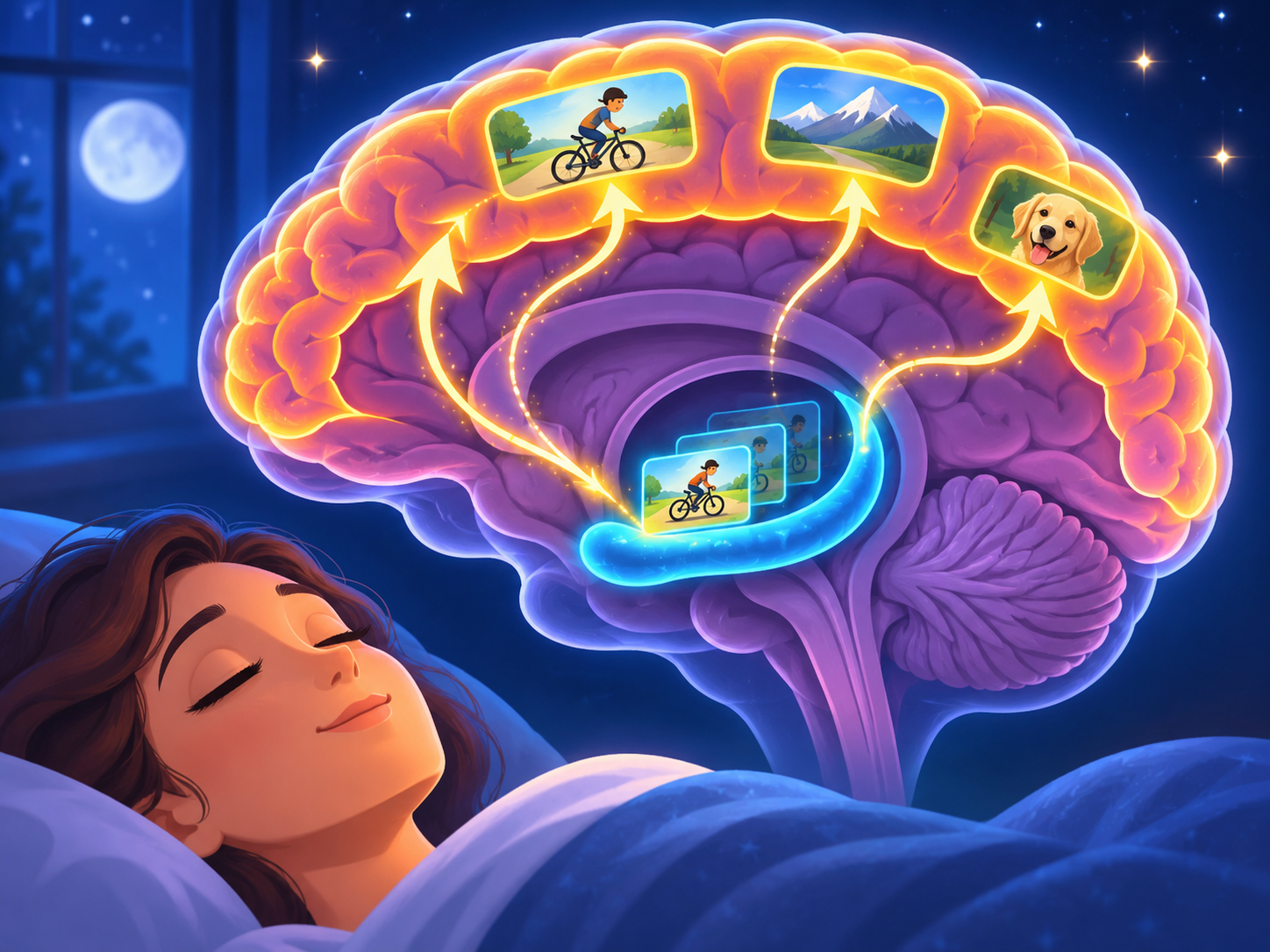
Your Brain Has a Night Shift
Your brain doesn’t simply switch off when you close your eyes. It moves through different stages of sleep, each with its own patterns of electrical activity. During these hours, networks of brain cells communicate in ways that help support learning and memory.
Think of your day as a busy trip where you take dozens of photographs. Sleep is one of the times your brain works on sorting the pictures and helping important ones become easier to find. It’s an analogy, but it captures a remarkable fact: memory is an active process, even while you rest.
Meet the Hippocampus: Your Brain’s Memory Helper
Deep inside your brain is a small structure called the hippocampus. It helps you form new memories of experiences and facts. You might use it when learning the name of a new friend or remembering what happened during a vacation.
Scientists study how the hippocampus and the outer layers of the brain, called the cerebral cortex, work together. One leading model proposes that during sleep, some recently formed memories are repeatedly activated and gradually become better integrated into longer-lasting networks across the brain.
What Happens While You Sleep?
1. The Brain Replays Parts of the Day
Researchers have found that patterns of activity connected with waking experiences can appear again during sleep. This process, called reactivation, is one way scientists explain how sleep helps strengthen learning.
2. Slow-Wave Sleep Helps Memories Settle In
During deep non-REM sleep, the brain produces slow electrical waves. Faster bursts of activity called sleep spindles can also appear. Researchers are investigating how these rhythms help different brain areas coordinate the work of storing memories.

3. A New Skill Gets More Practice
Suppose you spend the afternoon practicing a tennis serve or playing a new song on the piano. Practice is what builds the skill. Sleep can support the brain changes that help you remember what you’ve practiced. In some experiments, people performed better after a period that included sleep than after the same amount of time spent awake.
What Does the Scientific Research Say?
A 2024 review of systematic reviews and meta-analyses examined research on sleep and memory in children and adults. It found evidence that sleep supports several kinds of memory, including remembering future tasks and making connections between pieces of information.
A major review published in Physiological Reviews in 2026 describes how sleep contributes to the formation of long-term memories and examines the brain processes behind that work. These findings give us an exciting look at why sleep is an essential partner in learning.
A 2026 systematic review of 19 studies also found that sleep was especially helpful for certain face-and-name learning tasks. Imagine your brain working to connect someone’s face with the name you just learned!

Sleep and Memory as We Grow Older
Memory matters at every age, from studying for a test to learning a new hobby in retirement. Researchers are also exploring how changes in sleep patterns with age may affect the brain’s ability to strengthen memories. Understanding this relationship could help guide future approaches to supporting cognitive health.
The encouraging takeaway is that everyday sleep habits are something we can pay attention to right now.
Five Simple Ways to Support Your Brain’s Night Shift
- Keep a regular sleep schedule. Try going to bed and waking up around the same time each day.
- Give yourself enough time to sleep. Most adults are advised to aim for at least seven hours per night.
- Practice, then rest. After learning something new, give your brain the chance to process it during sleep.
- Make the bedroom comfortable. A quiet, dark, pleasantly cool room can help create a restful setting.
- Enjoy daylight and movement. Regular activity and daytime light help support your body’s daily rhythm.
Explore More About Sleep
Curious about how foods and plant compounds relate to rest? Read our Tart Cherry and Sleep: What Human Studies Really Show. It explores published human research on tart cherry juice and sleep.
Frequently Asked Questions
Does your brain stop working when you fall asleep?
Quite the opposite! Your brain remains active throughout the night, moving through sleep stages and taking part in processes involved in learning and memory.
What is memory consolidation?
It is the process by which recently learned information becomes more stable and is woven into the brain’s longer-term memory networks.
Can sleep help after learning a new skill?
Yes. Studies suggest that sleep can help strengthen some kinds of learning, including certain movement skills and memories for facts or experiences.
The Amazing Takeaway
You close your eyes, the room becomes quiet, and another part of your day begins. Deep inside your brain, billions of cells continue their intricate work. Sleep gives your memory systems a chance to organize and strengthen what you’ve learned. Every restful night is another opportunity for your remarkable brain to do its work.
Scientific References
- Lutz ND, Harkotte M, Born J. Sleep’s contribution to memory formation. Physiological Reviews. 2026.
- Sleep and memory consolidation in healthy children and adults: a summary of systematic reviews and meta-analyses. 2024.
- Ke H, Yuan K, Liu K. The role of sleep in strengthening face learning and memory consolidation: A systematic review. 2026.
- Does overnight memory consolidation support next-day learning? 2025.
By Healthy Vitality Hub Editorial Team. This article provides general educational information.
Leave a Reply